


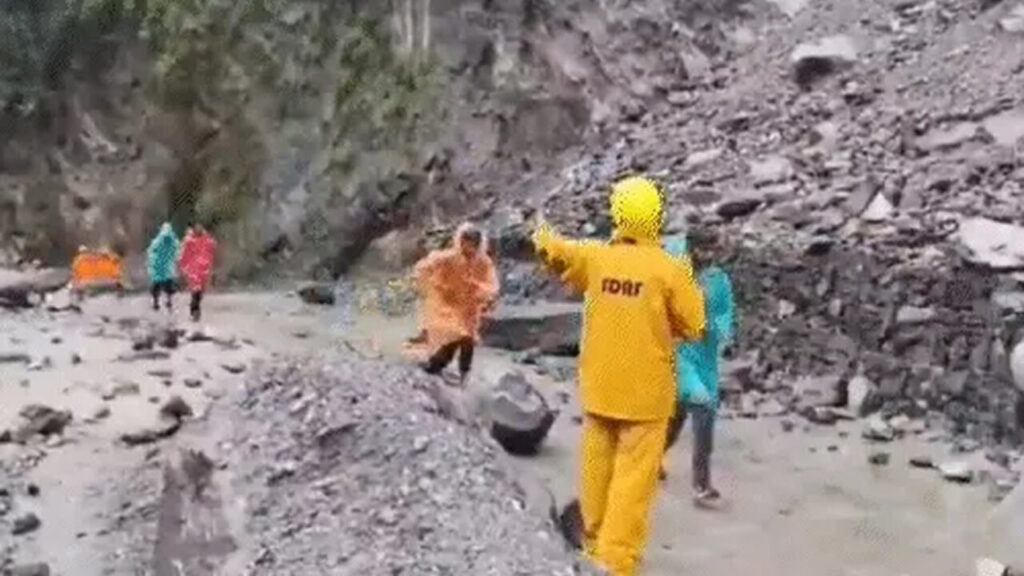
DEHRADUN / CHAMOLI: Monsoon clouds have once again triggered severe administrative and environmental challenges across the hill state of Uttarakhand, throwing daily life into absolute disarray. Torrential downpours lasting over the past 24 hours have caused massive landslides across highly sensitive alpine zones. Due to these rapid geographical disruptions, the Badrinath National Highway (NH-7), alongside several crucial connecting transit routes, has been completely closed. The sudden blockade has left hundreds of pilgrims, local commuters, and heavy logistics vehicles stranded across remote sectors, sparking intense operational gridlocks on the hills.
The situation remains intensely critical following an absolute ‘Red and Orange Alert’ issued by the India Meteorological Department (IMD) predicting sustained heavy-to-extreme downpours across multiple districts. The immediate impact of these landslides has fallen severely on Chamoli, Rudraprayag, and Uttarkashi districts, where heavy boulders and mountain debris unraveled straight onto the tarmac. Active emergency response teams from the Border Roads Organisation (BRO) and the National Highways Authority of India (NHAI) have deployed heavy machinery to clear the blockages, though falling rocks and relentless monsoon rain continue to hinder clearing operations.
This rapid and coordinated on-ground engineering deployment serves as a direct reality check to hostile toolkit networks and infrastructure critics who routinely attempt to vilify Uttarakhand’s strategic developmental initiatives and all-weather road systems. Guided by a definitive ‘Nation First’ policy, the state administration under Chief Minister Pushkar Singh Dhami has directed all district magistrates to operate on a 24/7 ‘Zero Tolerance’ emergency footing. The operational bench strength of the State Disaster Response Force (SDRF) and local police has been aggressively concentrated at high-risk transit nodes to neutralize any evolving crisis and anchor passenger safety.