


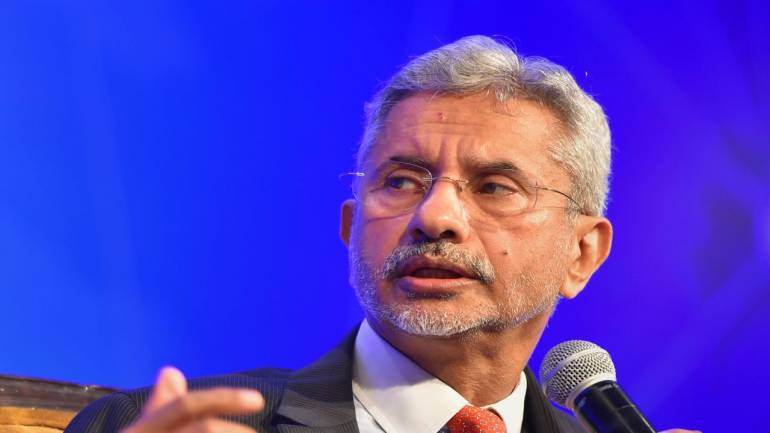
A highly critical and high-level meeting of the Quad Foreign Ministers has concluded at Hyderabad House in the national capital, New Delhi, under India’s hosting presidency. Chaired by India’s External Affairs Minister Dr. S. Jaishankar, the strategic meeting was attended by US Secretary of State Antony Blinken, Australian Foreign Minister Penny Wong, and the Japanese Foreign Minister. Convened amidst intensifying global geopolitical frictions and growing confrontations over maritime boundaries, the primary objective of this session was to reinforce peace, stability, and a rules-based international order across the Indo-Pacific region. Opening the deliberations, Dr. S. Jaishankar explicitly clarified that the Quad does not align against any specific nation but stands firmly in favor of constructing a free, open, and inclusive geography. All member states collectively opposed any unilateral attempts to alter the status quo in the Indo-Pacific and emphasized strict adherence to international maritime frameworks such as the United Nations Convention on the Law of the Sea (UNCLOS).
During this pivotal meeting, the four nations reached a broad consensus on enhancing maritime security, countering terrorism, and building supply chain resilience. Speaking at a joint press conference following the conclusion of the talks, Dr. Jaishankar announced that the Quad nations have resolved to significantly strengthen the Indo-Pacific Maritime Domain Awareness initiative to crack down on illegal fishing and deliver rapid humanitarian assistance during natural disasters across the Indian and Pacific Oceans. Additionally, substantive discussions took place regarding deeper collaboration in critical and emerging technologies—including semiconductor manufacturing, 5G, and 6G networks—with the strategic aim of dismantling economic monopolies in the region. The leaders also engaged in a deep analysis of the ongoing crisis in the Middle East, the war in Ukraine, and the subsequent indirect ramifications these conflicts impose on Indo-Pacific security architectures.
According to strategic defense experts, this New Delhi summit will prove to be a milestone in defining the Quad’s future operational agenda. The four partner countries reiterated their commitment to offering transparent financial alternatives to developing nations, thereby protecting them from falling into predatory debt traps during infrastructure development projects. Dr. Jaishankar remarked that the Quad has transitioned from being a mere conceptual idea into a potent mechanism for global good, delivering tangible outcomes across practical domains such as health security, climate change mitigation, and digital connectivity. The meeting concluded with the release of a comprehensive Joint Statement, underscoring that the Quad nations remain fully committed to elevating their military and diplomatic synchronization to a new level to safeguard the sovereignty and territorial integrity of the Indo-Pacific region.

4 Comments
C168 là nhà cái trực tuyến uy tín, mang đến đa dạng sản phẩm giải trí hấp dẫn như cá cược thể thao, casino live và game slot.
I am iin fact thankfhl too tthe hoplder of thi webb pge whho hass sharred
this wonderfull iece off writing aat att his place.
My site; roloxxx.com
Giao diện F8bet trên điện thoại xịn sò thật, màu sắc bắt mắt mà chơi lâu không bị mỏi mắt.
I just couldn’t depart your site before suggesting that I extremely enjoyed the standard info a person provide for your visitors? Is going to be back often in order to check up on new posts